Key Takeaways:
- After professional tile cleaning, sealing grout is highly recommended — especially in Arizona — because clean grout pores are maximally open and receptive to sealant penetration.
- Arizona’s hard water and extreme heat accelerate grout degradation, making sealing a practical protective step rather than an optional luxury for Gilbert homeowners.
- Grout sealant typically lasts 12–24 months in Arizona’s climate before reapplication is needed, and both DIY and professional options are viable depending on your tile area and budget.
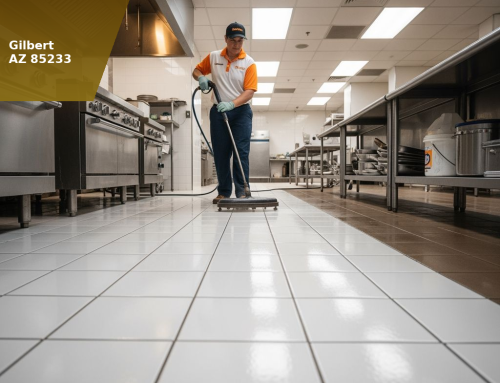
Yes — in most cases, you should seal your grout after professional tile cleaning. The cleaning process removes embedded dirt, mineral deposits, and old sealant residue, leaving grout pores open and more receptive to a fresh protective barrier than they’ll ever be again. Whether sealing is the right call for your specific situation depends on your tile type, your home’s water exposure, and how much maintenance effort you’re willing to put in long-term.
What Grout Sealing Actually Does (And What It Doesn’t)
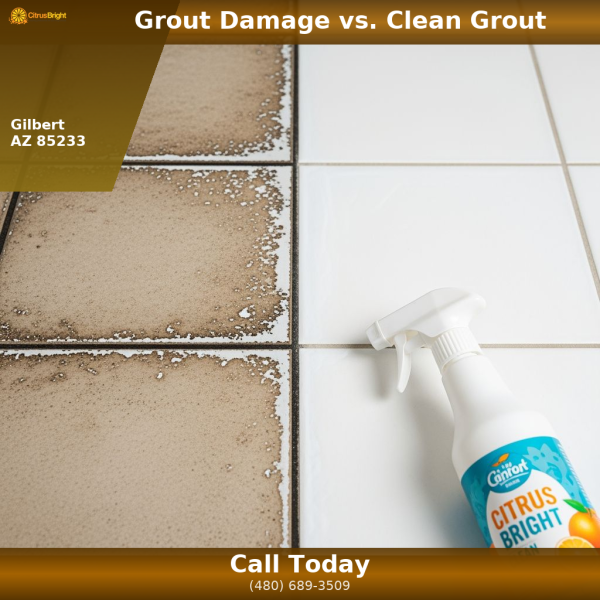
Grout is a cement-based material, and cement is naturally porous. Under a microscope, grout lines look more like a sponge than a solid surface. Every time water, cooking grease, soap scum, or mineral-laden tap water contacts unsealed grout, some of that liquid seeps into the microscopic channels. Over time, what’s pulled in stays in — which is why grout darkens, stains, and seems impossible to clean without professional equipment.
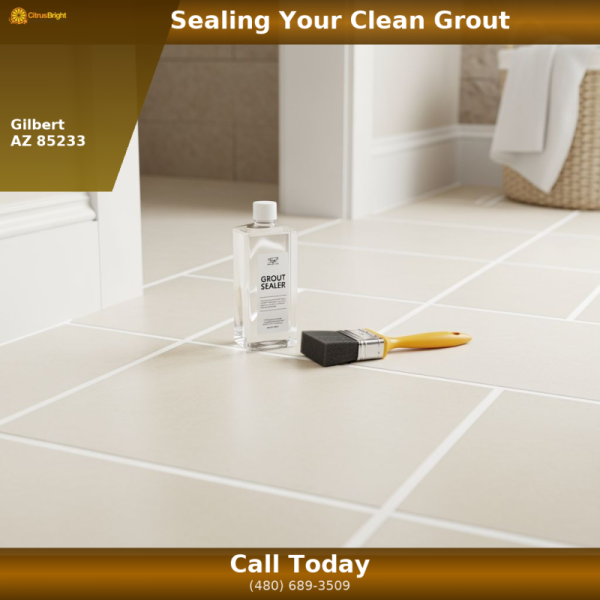
A penetrating grout sealer works by soaking into those channels and creating a barrier inside the material itself. Liquid still touches the surface, but the sealer significantly slows how much moisture and what it carries — minerals, soils, mold spores — can migrate deeper into the grout body. The result is a surface that’s easier to wipe clean between deep cleanings and less likely to harbor the kind of embedded grime that requires high-pressure steam extraction to remove.
However, a grout sealer is not a permanent stain shield. Here’s what sealing does not do:
- It won’t reverse existing staining or discoloration — only professional cleaning can address that.
- It won’t make grout maintenance-free; regular wiping and periodic cleaning are still necessary.
- It won’t last forever; foot traffic, cleaning products, and UV exposure all wear sealant down over time.
- It doesn’t protect against cracked or crumbling grout — structural grout issues require repair, not sealing.
Understanding this distinction matters because some homeowners over-invest in sealing products, expecting a transformation, while others skip it entirely because they don’t see the point. The realistic value is squarely in the middle: sealing meaningfully extends the time between professional cleanings and makes routine maintenance easier.
Why Arizona’s Climate Makes Grout Sealing More Valuable
Gilbert homeowners face a specific combination of conditions that make unsealed grout more vulnerable than in many other parts of the country.
First, the water. The municipal water supply throughout the East Valley — including Gilbert, Mesa, and Chandler — is notably high in dissolved calcium and magnesium. Hard water leaves mineral deposits on every surface it contacts, and within unsealed grout, those deposits accumulate in the pores. What you see as white haze or chalky residue on grout lines is a surface symptom; the mineral infiltration goes deeper than any household cleaner can reach without professional help.
Second, the heat. Arizona summers push interior surfaces through significant temperature cycles. Grout expands and contracts with these shifts, and repeated thermal cycling opens micro-fractures over time. Those micro-fractures invite more moisture infiltration, accelerating the degradation cycle. In 2026, Phoenix metro water authorities continue to note elevated hardness levels in the region, making this an ongoing consideration for homeowners rather than a temporary concern.
Third, the dryness. Counterintuitively, dry climates can increase the rate at which mineral deposits concentrate on and within grout. When water evaporates quickly — as it does in Arizona — it leaves behind whatever was dissolved in it. The minerals don’t evaporate with the water; they stay, building up with each exposure cycle.
For all of these reasons, a homeowner in Gilbert gets more protective value per dollar from grout sealing than someone living in a mild, humid climate with softer water.
When the Timing Is Right for Sealing
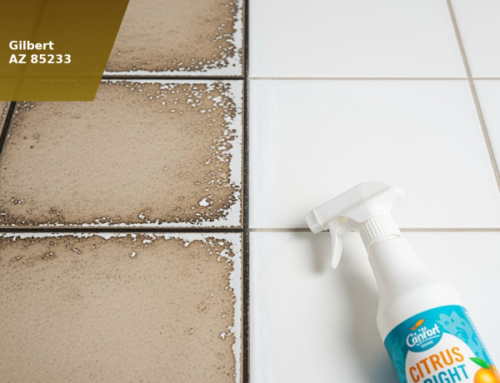
The best possible moment to apply grout sealer is immediately after professional cleaning — specifically, once the grout is completely dry. Professional tile and grout cleaning opens up the pore structure more thoroughly than any surface wipe-down can. Old sealant is lifted, mineral crust is cleared, and organic buildup is extracted. What remains is essentially clean, open-pored grout: the ideal surface for sealant absorption.
Timing the application correctly matters. Grout must be completely dry before sealer is applied — typically 24 hours after cleaning, though Arizona’s low humidity often accelerates drying significantly. Applying sealer to damp grout traps moisture, which can lead to efflorescence (a white, powdery blush) or mold growth beneath the seal layer.
If your tile and grout were cleaned but not sealed at the time of service, you still have a reasonable window — usually a few weeks — before normal household activity begins reintroducing soils into the open pores. However, the sooner after cleaning you seal, the better the absorption and the longer the protection tends to last.
- Shower enclosures with vertical tile surfaces
- Large open-plan tiled areas (kitchens, living spaces)
- Natural stone tile with special sealing requirements
- Any area where grout discoloration has been a recurring problem
The goal in either case is the same: a clean, dry surface, a quality penetrating sealer, and enough dwell time for full absorption before foot traffic resumes.
How Long Does Grout Sealant Last in Arizona?
Most penetrating grout sealers, applied correctly to clean grout, last approximately 12 to 24 months under normal residential conditions. In Arizona, expect the lower end of that range in high-traffic areas like kitchen floors and shower surrounds, and toward the higher end in lower-traffic spaces like a guest bathroom or a tiled laundry room.
Several factors influence longevity:
- Foot traffic volume and shoe type (bare feet vs. hard-soled shoes)
- Frequency of wet mopping with cleaning products (harsh cleaners degrade sealant faster)
- UV exposure in tiled sunrooms or areas near large windows
- Grout line width and depth (wider grout joints absorb more sealer and often hold it longer)
A simple test will tell you when it’s time to reseal: drop a small amount of water onto the grout line. If the water beads up and sits on the surface, the sealer is still active. If the water absorbs quickly and darkens the grout, the protective barrier has worn down, and resealing is due.
DIY Sealing vs. Professional Application
Many Gilbert homeowners successfully seal their own grout after professional cleaning, and for straightforward flat tile floors with standard sanded grout, this is a reasonable approach. Brush-on penetrating sealers are widely available, and the application process is not technically complex.
That said, professional application offers a few advantages worth considering. Technicians apply sealant more evenly across the grout surface, reducing the risk of over-application (which can leave a hazy film on tile faces) or under-application (which leaves gaps in coverage). For shower walls, intricate mosaic tile, or large square footage, the precision and speed of professional application often justify the added cost.
Where DIY makes sense:
- Small tiled areas like a single bathroom floor
- Simple grid patterns with wide, easy-to-access grout lines
- Homeowners comfortable with careful, deliberate surface work
Where professional sealing tends to deliver better results:
- Shower enclosures with vertical tile surfaces
- Large open-plan tiled areas (kitchens, living spaces)
- Natural stone tile with special sealing requirements
- Any area where grout discoloration has been a recurring problem
The goal in either case is the same: a clean, dry surface, a quality penetrating sealer, and enough dwell time for full absorption before foot traffic resumes.
Frequently Asked Questions about Sealing Grout
Why Trust Citrus Bright
At Citrus Bright, we take pride in delivering exceptional cleaning services for both homes and businesses. What sets us apart? Our commitment to the environment and your well-being. With our unique citrus-based cleaning solutions, we offer a refreshing approach to carpet cleaning, tile and grout cleaning, upholstery treatments, and heavy pet soil areas.
Our citrus-based cleaning technology is a game-changer in the industry. Unlike traditional cleaning agents, our eco-friendly solutions harness the power of citrus to break down dirt, grime, and stains effectively while leaving behind a pleasant, natural fragrance. This innovative approach is not only effective but also reduces the use of harsh chemicals, making it ideal for homes with children, pets, or individuals with sensitivities.
At Citrus Bright, our dedication goes beyond just cleaning; it’s about creating a healthier, more comfortable environment for you and your loved ones. Experience the difference of our citrus-based approach and let us help you maintain a spotless and inviting space.
To book an appointment, contact us at one of our two offices our professional carpet cleaning Queen Creek Location or visit our professional carpet cleaning service in Phoenix. Let us show you the Citrus Bright Difference.
Learn more about our tile and grout cleaning services.