
Key Takeaways:
- Monsoon season in Gilbert, AZ, deposits haboob silica dust and algae that require professional pressure washing — not just a garden hose rinse — to be fully removed from driveways, patios, and pool decks.
- The best time to schedule pressure washing is after the final monsoon event of the season (typically late September), though mid-season cleaning is worthwhile if biological growth on shaded walls becomes visible.
- Citrus Bright serves Gilbert and across the East Valley with residential and commercial exterior cleaning — contact the team to assess your surfaces before staining sets permanently into concrete or pavers.
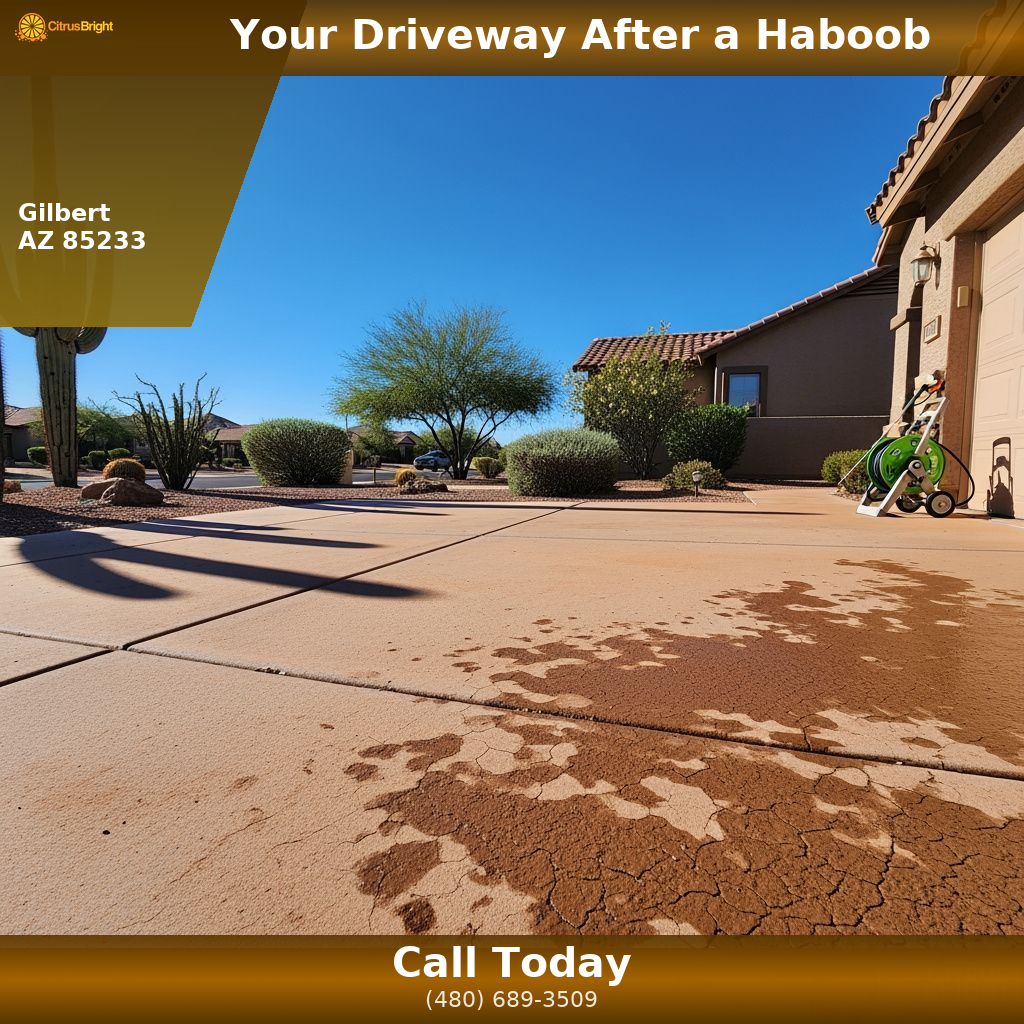
Should you pressure-wash your driveway after the monsoon season in Arizona? Yes — and the sooner, the better once the storms have passed. Haboob dust and monsoon mud don’t behave like ordinary dirt; they dry into a fine-silica crust that bonds aggressively to concrete, pavers, and stucco, and a garden hose will barely scratch the surface. However, timing and technique matter significantly if you want clean results without damaging your exterior surfaces.
What the Monsoon Season Does to Gilbert Driveways and Patios
Arizona’s monsoon season runs from mid-June through late September, and 2026 has already delivered several substantial haboob events across the East Valley. For Gilbert homeowners, that means concrete driveways, exposed aggregate patios, travertine pool decks, and painted block walls are absorbing a very specific kind of punishment.
Here’s what’s happening to your exterior surfaces during every storm cycle:
- Fine silica particles from haboob dust settle into the porous surface of concrete and pavers, then get locked in place once moisture evaporates.
- Monsoon rain carries organic material — leaf debris, soil, roof runoff — that deposits across horizontal surfaces and feeds biological growth.
- Repeated wet-dry cycles cause pavers and concrete to expand and contract, opening micro-fissures where dirt and algae spores can penetrate deeper over time.
- Stucco and painted walls trap fine-particle dust in their texture, creating a dingy gray film that dulls even freshly painted surfaces.
- Pool decks experience splash zone saturation during storms, dramatically accelerating the conditions that promote algae and mold growth.
The result by late September is often a driveway that looks permanently discolored, a patio coated in a pale dust film, and a pool deck that has become genuinely slippery underfoot. None of that is cosmetic — the slip hazard on algae-covered travertine is a real safety concern for families.
Types of Exterior Staining After Arizona Haboobs
Not all monsoon staining responds the same way to pressure washing, and understanding the difference helps you set realistic expectations.
Haboob silica deposits are the most common issue in Gilbert after a major dust storm. This fine-particle layer dries into something closer to cement than dirt. Professional-grade pressure washing with the right surface cleaner attachment breaks this bond effectively on concrete, brick, and most pavers. However, the longer silica sits — especially through multiple rain-bake-rain cycles — the harder it becomes to remove completely.
Organic staining from algae, mold, and mildew is the second major category. You’ll see this as green or black discoloration, typically on north-facing walls, shaded patio sections, and pool deck perimeters. Pressure washing alone removes the surface layer, but effective treatment usually pairs water pressure with a biodegradable detergent or soft-wash solution to kill spores at the root and prevent rapid regrowth.
Rust and mineral staining are a third category that trips up homeowners. Arizona’s hard water deposits and irrigation runoff leave orange-brown streaks on driveways and block walls near hose bibs and sprinkler heads. Pressure washing removes loose surface rust discoloration in some cases, but deep mineral staining that has penetrated into concrete may require a chemical treatment applied before or after the wash. Some mineral staining is permanent, and pressure washing alone won’t reverse it — honest expectation-setting matters here.
Painted or coated surfaces require a softer approach. High-pressure washing on painted block walls or painted concrete can lift and flake the coating. A professional soft-wash technique — lower pressure, longer dwell time with cleaning solution — is the appropriate method for those surfaces.
Pool Deck and Patio-Specific Issues in Arizona Summer
Pool decks deserve their own conversation because the combination of pool water chemistry, monsoon humidity, and sun exposure creates a uniquely aggressive environment for biological growth.
Travertine, a popular East Valley pool deck material, is naturally porous. After monsoon events, algae spores carried in on rain and wind find ideal growing conditions in the damp, shaded grout lines and surface pores. What starts as a faint green tinge in early August can become a genuinely hazardous surface by September.
Exposed aggregate and brushed concrete pool decks hold water in their texture after splashing and rainfall. That standing moisture, combined with the monsoon humidity that surprises many newer Arizona residents, creates conditions where algae can establish within days rather than weeks.
Additionally, pavers used in high-end East Valley patios — travertine, flagstone, porcelain — each respond differently to water pressure. Softer natural stone can be damaged by high-PSI surface cleaning. A professional assessment before washing determines the appropriate pressure and technique for your specific material, which is why a DIY approach with a rented pressure washer carries real risk on premium surfaces.
When to Schedule Pressure Washing During Monsoon Season
Timing your pressure washing around Arizona’s monsoon season is a legitimate strategic question. Two approaches make sense depending on your situation.
Post-season cleaning (late September to October) is generally the most efficient choice. Waiting until after the final monsoon event means you clean once and the results hold through the mild Arizona fall and winter. Scheduling pressure washing mid-July, then enduring six more haboob events, means you’re essentially paying to clean a surface that will be re-coated within days.
Mid-season cleaning makes sense when biological growth becomes visible and accelerates. If your north-facing wall has developed visible black mold streaks by early August, or your pool deck has become slippery, waiting another two months creates a safety risk and allows biological growth to penetrate deeper into the surface. In those cases, a mid-season wash — accepting that you may want a lighter follow-up cleaning in October — is the right call.
The practical answer for most Gilbert homeowners: schedule an assessment in early October, once monsoon season has wound down, and address everything in a single visit.
What Citrus Bright’s Pressure Washing Process Covers
Mike’s team at Citrus Bright works with homeowners in Gilbert and the East Valley on exactly the kind of post-monsoon exterior cleaning described above. The process starts with a surface assessment — identifying the staining type, surface material, and appropriate pressure and cleaning solution for each area — before any water hits your property.
Citrus Bright handles:
- Concrete driveway and walkway cleaning using commercial surface cleaner equipment
- Paver patios and pool decks with material-appropriate pressure settings
- Soft-wash treatment for stucco and painted exterior walls
- Biological growth removal with biodegradable detergent solutions
- Post-wash rinse and inspection to confirm results
The team also serves commercial properties across East Valley — parking lots, building facades, and common area hardscape — using the same approach: assess first, then clean to the surface’s requirements.
One honest note: some staining, particularly deep mineral rust deposits or stains that have been baking into concrete through multiple Arizona summers, may not fully resolve through pressure washing alone. Citrus Bright will tell you that upfront rather than after the fact.
Frequently Asked Questions
Why Trust Citrus Bright
At Citrus Bright, we take pride in delivering exceptional cleaning services for both homes and businesses. What sets us apart? Our commitment to the environment and your well-being. With our unique citrus-based cleaning solutions, we offer a refreshing approach to carpet cleaning, tile and grout cleaning, upholstery treatments, and heavy pet soil areas.
Our citrus-based cleaning technology is a game-changer in the industry. Unlike traditional cleaning agents, our eco-friendly solutions harness the power of citrus to break down dirt, grime, and stains effectively while leaving behind a pleasant, natural fragrance. This innovative approach is not only effective but also reduces the use of harsh chemicals, making it ideal for homes with children, pets, or individuals with sensitivities.
At Citrus Bright, our dedication goes beyond just cleaning; it’s about creating a healthier, more comfortable environment for you and your loved ones. Experience the difference of our citrus-based approach and let us help you maintain a spotless and inviting space.
To book an appointment, contact us at one of our two offices our professional carpet cleaning Queen Creek Location or visit our professional carpet cleaning service in Phoenix. Let us show you the Citrus Bright Difference.


