Key Takeaways:
- Commercial tile and grout in restaurants, medical offices, and retail spaces accumulate grease, pathogens, and tracked-in soil at a rate that standard mopping cannot address — professional cleaning is essential.
- Different business types require different cleaning frequencies and disinfectant grades; restaurants and healthcare facilities face the highest contamination risk and the strictest standards.
- Citrus Bright provides hospital-grade disinfectant commercial tile and grout cleaning in Gilbert, AZ — schedule a consultation to protect your business’s appearance, hygiene, and compliance standing.
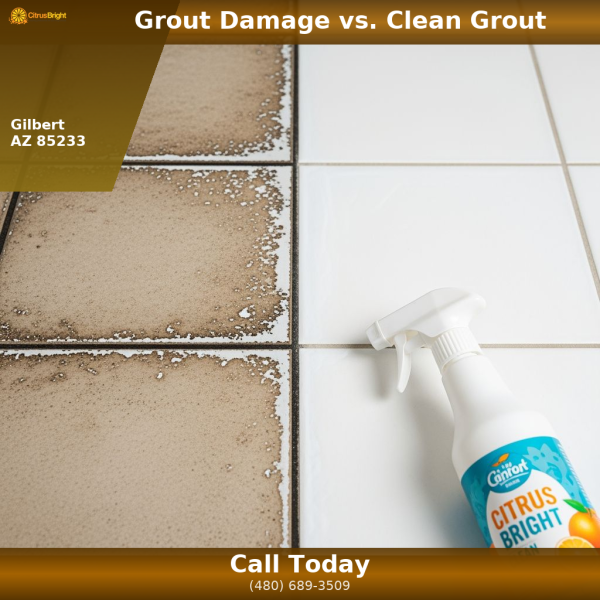
Most Gilbert restaurants should schedule professional tile and grout cleaning every one to three months, depending on volume and kitchen activity. High-traffic dining rooms and commercial kitchens accumulate grease, food particles, and moisture at a pace that no regular mop can keep up with — and in 2026, health inspectors are paying closer attention than ever to floor cleanliness. If your grout lines have shifted from white or tan to a persistent grey or brown, that discoloration is not cosmetic — it’s contamination.
Why Commercial Tile Gets Dirtier Faster Than You Think
Walk into any busy Gilbert restaurant, medical clinic, or retail storefront and look down. Tile floors in commercial settings face an entirely different load than those in residential kitchens or bathrooms. A home might see a few dozen footsteps per day across its tile. A busy East Valley restaurant might see several hundred. A regional retail space? Thousands.
Every shoe that crosses your threshold carries oils, soil compounds, and microbial material from parking lots, sidewalks, and other environments. That load is deposited directly onto your tile and — critically — pressed into your grout lines with every step. Grout is porous by nature. Those pores absorb what lands on them, and over time they accumulate layers of contamination that sit below the surface film a mop can reach.
Here’s the problem with standard commercial mopping: it spreads a thin layer of dirty water across your floor. That water carries suspended soils and grease molecules, some of which drain away — and some of which settle back into your grout once the water evaporates. Over dozens of mop cycles, contamination doesn’t decrease. It compounds.
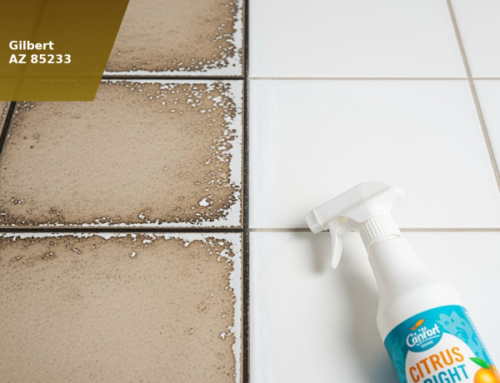
Professional commercial tile cleaning uses high-pressure hot-water extraction combined with targeted cleaning agents to physically pull that contamination out of the grout pores, rather than simply redistributing it. The difference is visible within a single session — and measurable in terms of hygiene.
Restaurant Tile and Grout: Grease, Heat, and Inspection Risk
Commercial kitchens in Gilbert and throughout the East Valley deal with a type of contamination that residential environments almost never encounter at scale: aerosolized cooking grease. Every time something comes into contact with a hot surface — oil, fat, or protein — microscopic grease particles become airborne and eventually settle. They coat walls, equipment, and floors. In a kitchen with tile flooring, grease bonds into grout pores in a way that water-based mopping literally cannot break down. You need an emulsifying agent strong enough to separate grease molecules from a porous substrate.
For dining room tile, the challenge shifts slightly. Beverage spills, foot traffic patterns concentrated around tables and the bar, and humidity all combine to create ideal conditions for mold and mildew growth inside grout — particularly in darker corners and near service stations.
From an inspection standpoint, visibly stained or pitted grout in a food service environment raises legitimate flags:
- Inspectors can cite grout that appears to harbor residue as a sanitation concern
- Cracked or heavily discolored grout is harder to clean and can be flagged during routine evaluations
- Grout in disrepair near food preparation areas may indicate broader sanitation practices that warrant closer scrutiny
Citrus Bright recommends that most Gilbert restaurants schedule professional tile and grout cleaning quarterly, with higher-volume establishments or those with open kitchen concepts considering monthly service for the kitchen floor specifically. This is not a luxury service — for a restaurant, it’s a maintenance cost of doing business safely.
Medical and Healthcare Facility Tile Cleaning: Why Hospital-Grade Disinfectant Matters
If grease is the primary enemy in a restaurant, the concern in a medical office, urgent care clinic, dental practice, or physical therapy facility is biological contamination. Healthcare environments deal with bodily fluids, respiratory particles, and a patient population that may include immunocompromised individuals. The floor — particularly tile grout — becomes a reservoir for microbial material that standard cleaning products are simply not formulated to address at the necessary level.
The U.S. Environmental Protection Agency maintains registration lists for hospital-grade disinfectants that meet the efficacy standards required in healthcare settings. Citrus Bright uses hospital-grade disinfectant solutions in commercial tile cleaning for medical facilities — not the residential-grade products appropriate for a home bathroom or kitchen.
This distinction matters beyond compliance. A waiting room floor cleaned with a general-purpose commercial cleaner may look clean. Under the right testing conditions, however, the grout lines may still harbor material that a registered hospital-grade disinfectant would neutralize. For a facility treating patients who depend on a clean environment, that gap is not acceptable.
Healthcare facilities in the East Valley should schedule professional tile and grout cleaning at least every 1 to 2 months, with high-traffic waiting rooms and procedure-adjacent corridors reviewed more frequently.
Retail and Office Tile Maintenance Schedules
Retail spaces and general commercial offices face a different but still meaningful challenge. Foot traffic at a busy Gilbert retail location during a high-season weekend can rival that of a casual dining restaurant. The soil load is primarily tracked-in particulate — dirt, asphalt residue, rubber compound from shoe soles, and outdoor allergens — rather than grease or biological material.
For these environments, the appearance dimension becomes especially important. A dental practice can have grout that looks slightly worn without necessarily alarming a patient. A high-end retail boutique, a real estate office, or a legal firm with visibly stained tile in the lobby communicates something immediate to every potential client who walks through the door: that maintenance is not a priority here. That impression is hard to recover from.
Recommended scheduling for retail and office tile:
- Light-traffic offices: professional cleaning every six months
- Moderate-traffic retail: every two to three months
- High-traffic retail or shared commercial lobbies: monthly or bimonthly service
Consistent professional cleaning also extends the life of your tile. Grout that is regularly deep-cleaned does not need to be regrouted or replaced — a significantly more expensive intervention.
What Citrus Bright’s Commercial Tile Cleaning Process Looks Like
Citrus Bright serves Gilbert and the broader East Valley with a commercial tile and grout cleaning approach built around the specific contamination profile of each business type. The process is not the same for a restaurant as it is for a medical office or retail space — because the contamination is not the same.
For commercial clients, the process generally includes:
- Pre-inspection of grout condition, tile type, and contamination level
- Application of appropriate pre-treatment agent (grease emulsifier for kitchens, hospital-grade disinfectant for healthcare, professional-grade cleaner for retail and office)
- High-pressure hot water extraction to physically remove contaminants from grout pores
- Surface rinse and neutralization to prevent residue buildup
- Post-cleaning inspection and documentation available for compliance records
Citrus Bright is a family-owned operation — the same attention to detail and honest communication that residential clients have come to trust apply directly to every commercial job. Businesses receive a clear service summary, realistic scheduling recommendations for their specific environment, and no upselling on services that aren’t warranted for their space.
If your Gilbert business has tile that hasn’t been professionally cleaned in six months or more — or if your grout lines have visibly darkened despite regular mopping — a professional assessment is the logical next step.
Frequently Asked Questions
Why Trust Citrus Bright
At Citrus Bright, we take pride in delivering exceptional cleaning services for both homes and businesses. What sets us apart? Our commitment to the environment and your well-being. With our unique citrus-based cleaning solutions, we offer a refreshing approach to carpet cleaning, tile and grout cleaning, upholstery treatments, and heavy pet soil areas.
Our citrus-based cleaning technology is a game-changer in the industry. Unlike traditional cleaning agents, our eco-friendly solutions harness the power of citrus to break down dirt, grime, and stains effectively while leaving behind a pleasant, natural fragrance. This innovative approach is not only effective but also reduces the use of harsh chemicals, making it ideal for homes with children, pets, or individuals with sensitivities.
At Citrus Bright, our dedication goes beyond just cleaning; it’s about creating a healthier, more comfortable environment for you and your loved ones. Experience the difference of our citrus-based approach and let us help you maintain a spotless and inviting space.
To book an appointment, contact us at one of our two offices our professional carpet cleaning Queen Creek Location or visit our professional carpet cleaning service in Phoenix. Let us show you the Citrus Bright Difference.
Learn more about our tile and grout cleaning services.